Text Access
Access via Brightspace > Content > Artemidorus. (Includes bibliographical data on the reading plus additional bibliography.)
We should keep in mind that the assigned passages offer only a very limited sampling of the work. Should you wish to write on Artemidorus' book, you'll need either to interlibrary-loan it or to get a copy of your own. If the latter, there is a very decent and reasonably priced translation available in paperback or electronic form.
SWA Prompt
How does this reading either reinforce or modify your view of the Imperial East during the period of the second sophistic? How might it add to your knowledge of that period?
A Few Notes on Artemidorus
First, let me share with you my main sources for this study guide:
Hammond, Martin, and Peter Thonemann. Artemidorus. The Interpretation of Dreams. New York: Oxford University Press, 2020. (Translation of the text, plus introduction and extensive notes.)
Thonemann, Peter. An Ancient Dream Manual: Artemidorus’ The Interpretation of Dreams. First edition. ed. Oxford: Oxford University Press, 2020. (A study of Artemidorus; our library has it as an online book.)
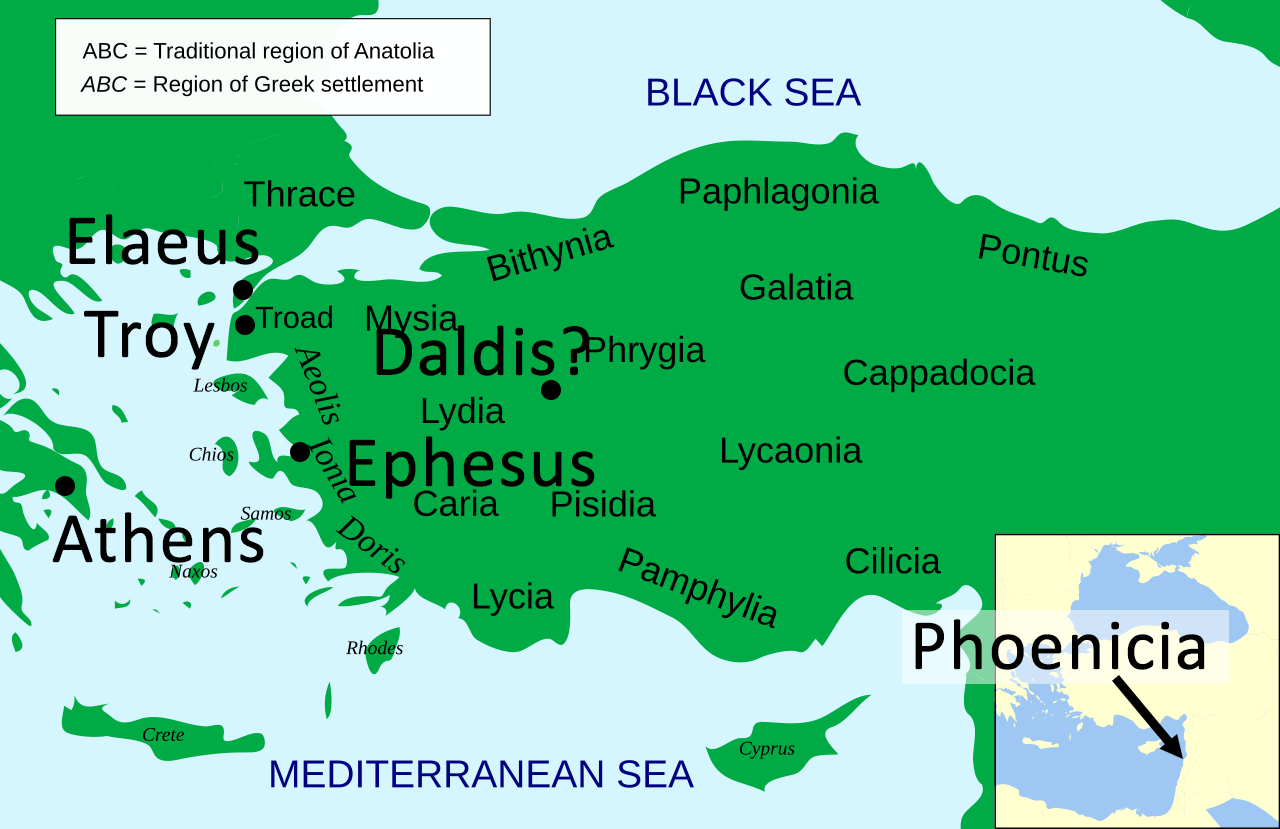
Now, down to business. We don't know much about Artemidorus. We do know that he is the author of the only work, the Oneirokritika, on dream interpretation from Greco-Roman antiquity to have survived entire. We learn that he was born in Ephesus, a city of coastal Anatolia, and that his mother was from Daldis, further to the east; it is as a citizen of Daldis that Artemidorus wants to be known.
We know that the author had a son, also Artemidorus, to whom he dedicates books 4 and 5 of his treatise, and that he had a friend, Cassius Maximus, to whom he dedicates books 1-3. This Cassius Maximus is, scholars plausibly suggest, the sophist and philosopher Maximus of Tyre. Scholars also propose that the book was composed over the course of several decades at the end of the second and the beginning of the third century — call it ca. 200 CE.
And it seems likely that Artemidorus was a member of the elite at Daldis, though probably not a Roman citizen — not, at least, until he and all other free provincials were granted citizenship by Caracalla in 212 CE.
But there is more to say that may help with understanding Artemidorus' book. The first thing has to do with language and style. The Greek in which it is written, though it provides evidence of a good education, is not the revived Attic Greek favored by sophists in their rhetorical work. Rather, it presents us with a specialized but straightforward version of the everyday Greek of the period, the so-called koinē, or "common Greek," typically used for, among other things, technical writing under the Empire. And although Artemidorus quotes and cites earlier literature with some frequency, the breadth and depth of his literary culture is viewed by at least one scholar as less than impressive.
If, then, the work in question is no testament to its author's sophistic paideia, what is it? It is, first and foremost, a demonstration of tekhnē, that is, practical skill. The author states that it is meant to be of use to other dream interpreters; these last include the author's son, to whom books 4-5 are dedicated.
One thing our author seems keen on our knowing is the extent of his theoretical and empirical knowledge. He has read all there is (so he says) on dream interpretation and has refined his knowledge "by assiduously collecting as many dreams as I could at the great religious festivals in Greece, and in Asia and then again in Italy" (Book 4, Preface, Hammond, trans.).
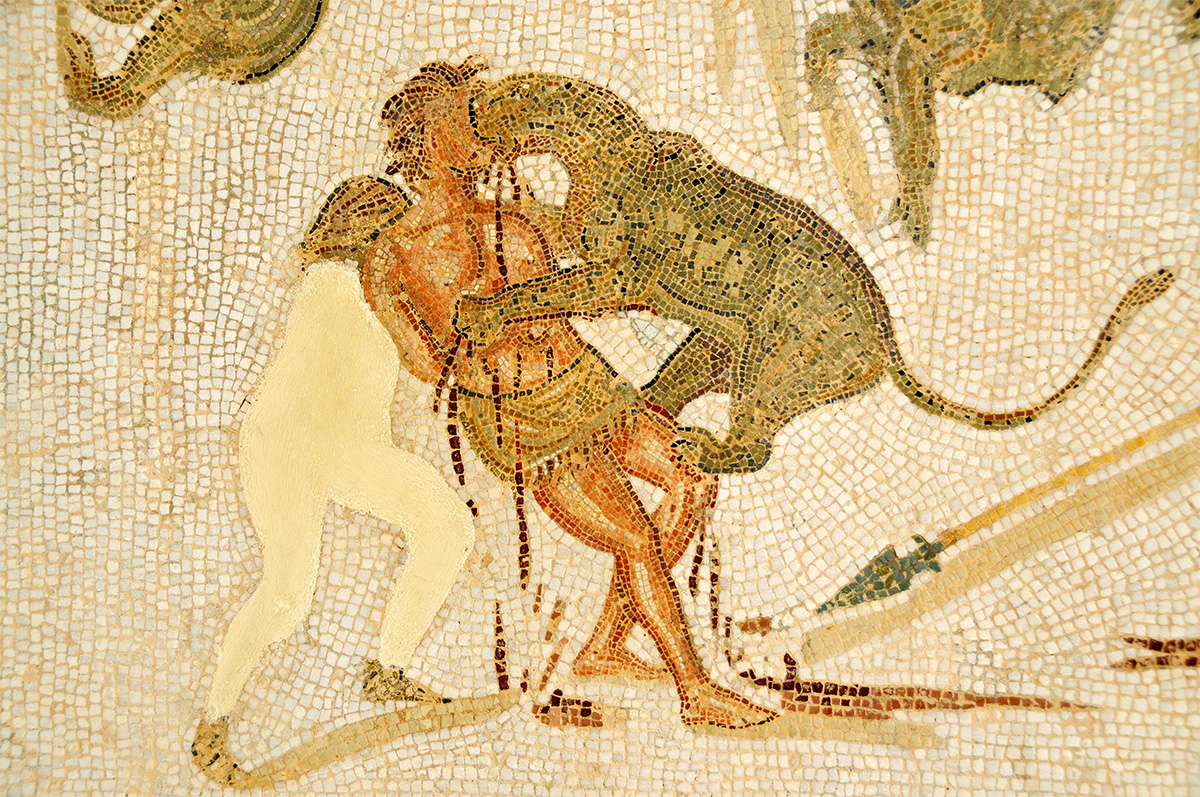
Notes Thonemann, "Greek agonistic culture and public spectacles are remarkably prominent in the world of the Oneirocritica." That is doubtless in part a reflection of the author's own enthusiasm for sport, not to mention the fact that his clientele seems in no small part to have been made up of those attending, or competing at, religious festivals like the Olympics. But it arguably also testifies to competition's hold on the psyche of those whose dreams this practitioner regularly interpreted, not just those of the sporty elite, but of artisans, slaves, and so on.
Another interesting feature of Artemidorus' book is the fact that, to quote Thonemann, "there is little sign that Artemidorus holds the poor in contempt." Thonemann further points out another aspect of Artemidorus' value system, its "unquestioning assumption that work is a good thing, and 'leisure' (scholē) is bad" — leisure being, apart from wealth itself, the chief marker of the wealthy.
This is not the place for a deep dive into the complicated issue of associations between Greco-Roman class and economic activity. It does, though, bear mentioning that Artemidorus' interest in the lives of slaves, artisans, and so on means that his book offers us a rare glimpse into the lives of sub-elites.
Finally, Artemidorus and Rome. Thonemann, in the abstract to his chapter on the subject (12. An Invisible Empire), writes, "The Roman imperial state, and Roman culture more generally, are (for the most part) conspicuous by their absence from the Oneirocritica." One exception is the Roman legal system, which looms "appallingly large in the subconscious of Artemidorus and his clientele." Artemidorus is hardly our only source for the Imperial judiciary as a highly public, theatrical, and often terrifying mechanism for Rome to demonstrate dominance over provincials. Still, the fact that Roman justice worked its way even into the dreams of Imperial subjects conveys a sense of the psychological impact of being Greek under Rome.