Overview

Each of you will present two solo oral presentations (no group presentations for this course) during the semester in fulfillment of the O – Oral Communication GenEd:
- A five-minute"paper pitch," that is, a brief preview of your 1st paper, with PowerPoint. For this presentation you will, in addition to presenting orally, upload to Brightspace both your presentation script and your PowerPoint — more below.
- A ten-minute encomium employing figured argument, that is, a speech praising someone (the encomium part) at the same time that it delivers a (semi-)hidden message for the benefit of that same person (the figured argument part). No PowerPoint — more below.
Part of the "O" requirement is that students have "ample opportunity . . . to critique presentations." This last you will be doing using one of two, dedicated Oral Presentation Rubrics, to be filled out in class after each presentation and to be consulted as part of the process of preparation; details follow.
Adequate rehearsal of each of these two presentations will be crucial, both for timing and for comfort level while presenting. Here follow specifics as to each of the two presentations. . . .
Presentation 1
This will be a brief and to-the-point introduction to your paper 1 topic. It's not an elevator pitch (60 seconds to introduce yourself to the boss and sell them your idea), but it's not that far off. In five minutes, and with a very basic PowerPoint, summarize your paper. Tell us about your topic, why it intrigues you, what you expect to argue in your paper 1, and what your main secondary source will be, how it relates.
What follows provides more detailed guidance. . . .
Topic
Because the first oral presentation will be a "pitch" for the topic of your first paper, this "Topic" section is the same for both the presentation and the paper. Obviously, the presentation, being a preview of the paper, will not involve the same depth of research as will the final product. Conversely, the paper will involve research additional to what you've done for your first presentation. Specific research req's for the presentation are covered on the Oral Presentations page; for the paper, on the Papers page.
This presentation-plus-paper project will be a critical-thinking exercise. It will have you speak/write on some aspect of any one of several ancient writings assigned since the start of class and continuing through 23-Feb (on declamation). Beyond choosing an ancient text on which to focus, you will need to select:
- A theme/issue/question that interests you and is central to this course. Find those course themes on the course homepage under the heading "Course Topics."
- A featured secondary source (FSS) that relates to the text and issue you''re studying.
- Number 2. will be a modern, scholarly, peer-reviewed book, book chapter, journal article, website, etc.
- You are free to use the Swain chapter on the novel as your FSS, though you do not have to — maybe something else better fits your topic
- For your FSS, please do not use a dictionary/encyclopedia entry, a bingdev webpage for this course, nor any source that has not been peer reviewed
With regard to the preceding, make sure you address the following critical-thinking questions:
You paper and presentation will need to reflect critically on your FSS: What light does it cast on your ancient text text, how well does it answer your questions about the text? Explain. Conversely, do you take issue in whole or in part with the author's claims, conclusions, approach? Again, explain. (For guidance on how to reflect critically on your FSS, please refer to the Critical Thinking page.)
Whatever your preference for topic, make sure to keep it small-scale!*
* Avoid topics that are too broad for treatment in five minutes or 3-5 pages, as in, "The Meaning of Life in Longus' Daphnis and Chloe." Finally, avoid statements, whether thesis statements or statements of any kind, that draw sweeping or unwarranted conclusions, for instance, "Daphnis and Chloe proves that the topic of love was alive and well in Greek literature of the Imperial period." That may be so, but how does one piece of evidence prove so broad a claim? How is that even relevant to our course?
I don't require you to clear your topic in advance with me, but I'm happy to talk about it with you; stop by my office during office hours or make an appointment. Still, you'll have a chance to test-drive your topic in your oral presentation. That will allow you to retool it if need be.
First Presentation: Various Specifics
Length. For this first presentation, I am asking you to speak for five minutes. In terms of word count, that's about 650 words if presenting at an average pace — the equivalent of two written pages, double-spaced, 12-point Times New Roman font.
What to upload. By the date and time given on the assignments schedule, upload both your performance script (a word document) and your PowerPoint (or Google slides).
Overall expectations for this presentation. As mentioned, part of its purpose is to test-drive your first-paper topic. A good-faith effort to do as assigned will be an important criterion. Brilliance and genius in this initial foray will not. Don't be surprised if comments lead you to change or to fine-tune your topic, your approach, your research, or something else.
Research. At this oral-presentation stage of the project, research expectations are somewhat more modest than they are for the first paper. This is your project at an early stage. You need, though, to get a jump on outside reading; study the Research section of the Papers page.
For now, that is, for this presentation, you need cite no more than two sources:
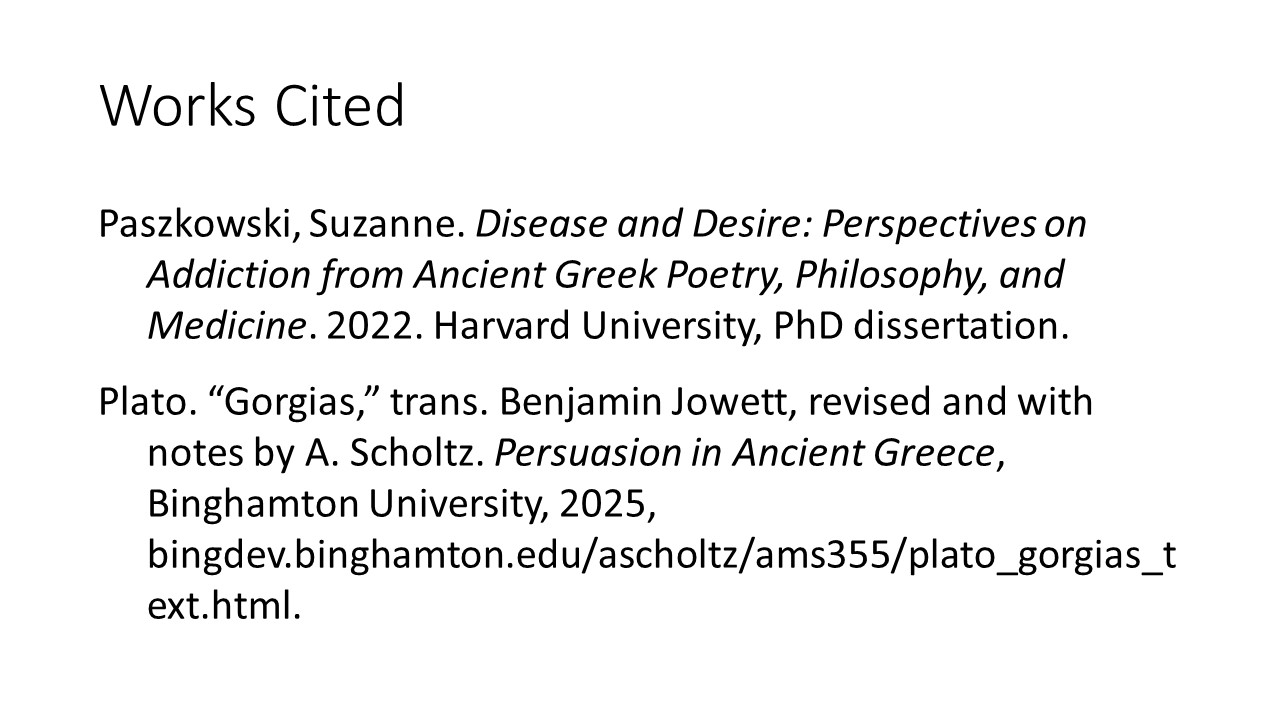
- Your primary, that is, ancient text; see the demo "Works Cited" slide below for what that citation should look like.
- A featured secondary source as per papers page, which see.
You will be submitting to Brightspace your presentation script as a word document, plus your PowerPoint (or Google Slides or similar) presentation file. Format for the script document is flexible (it's your presentation script, not the final paper version), but it has to be legible to me. No need for citations or bibliography in your script, as PowerPoint will include a "Works Cited" slide.
PowerPoint. Your oral presentation will be accompanied by a three-or-more-slide PowerPoint (or Google Slides) presentation. You have access to a demo PowerPoint. What follows offers further explanation and guidance.
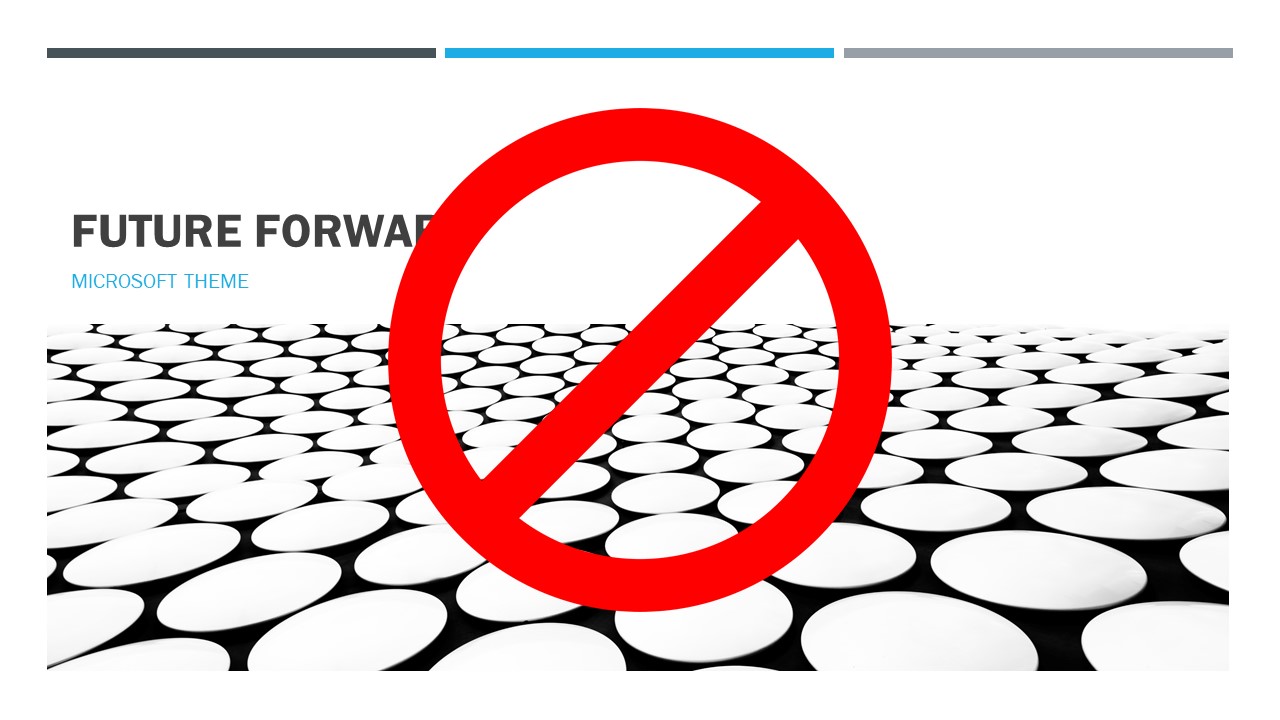
PowerPoint look and feel. Try to use a relatively plain and basic template for your presentation. The default template or design theme is ideal. The various themed templates that Microsoft supplies will look like . . . well, themed templates supplied by Microsoft, almost certainly to the detriment of your presentation's effectiveness. ("Why does their presentation have a bunch of circles? Oh, yeah, they're using that 'Future Forward' theme. Very . . . corporate?") Any added images or decoration must not distract from the presentation. If you add images, all must have alt text. If the image is merely decorative (and that can be effective!), alt text should merely say "decorative." If it adds to the substance of your presentation, the alt text must briefly explain.
This is not the kind of presentation where you insert actual content into slides. Save content for what you say aloud.
Specific layout of the presentation:
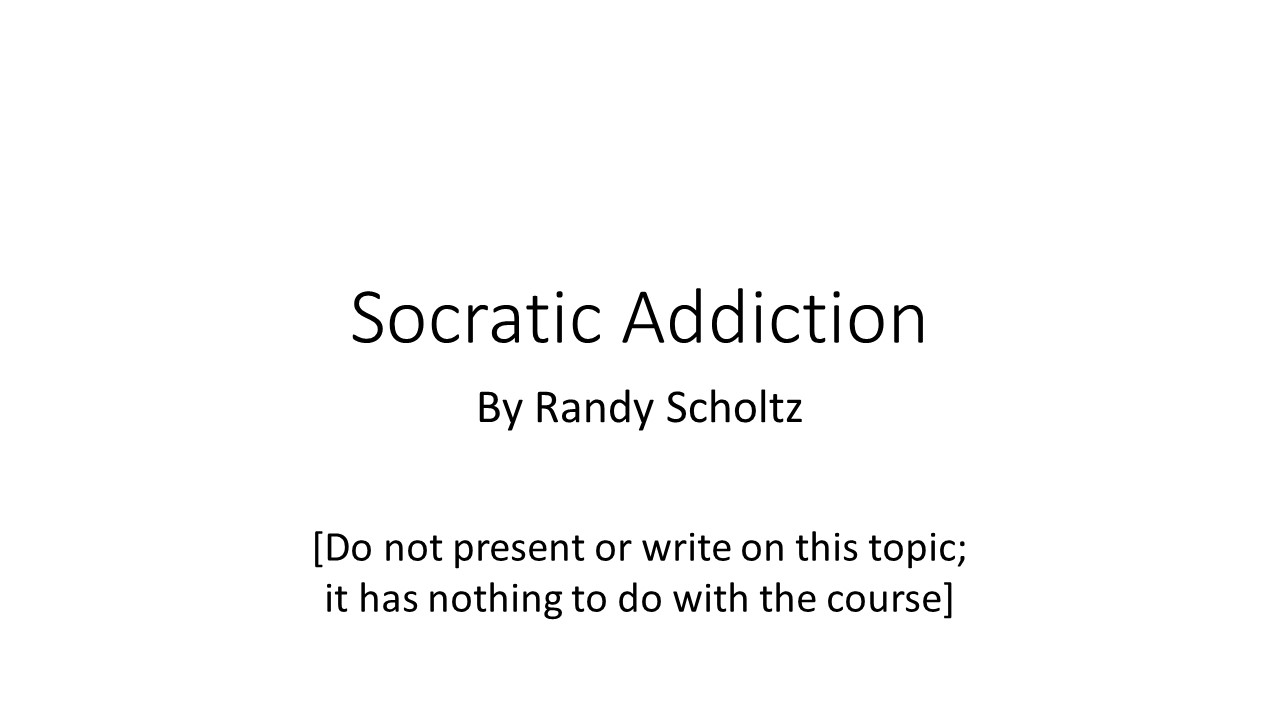
A title slide with:
- Your presentation's title
- Your name
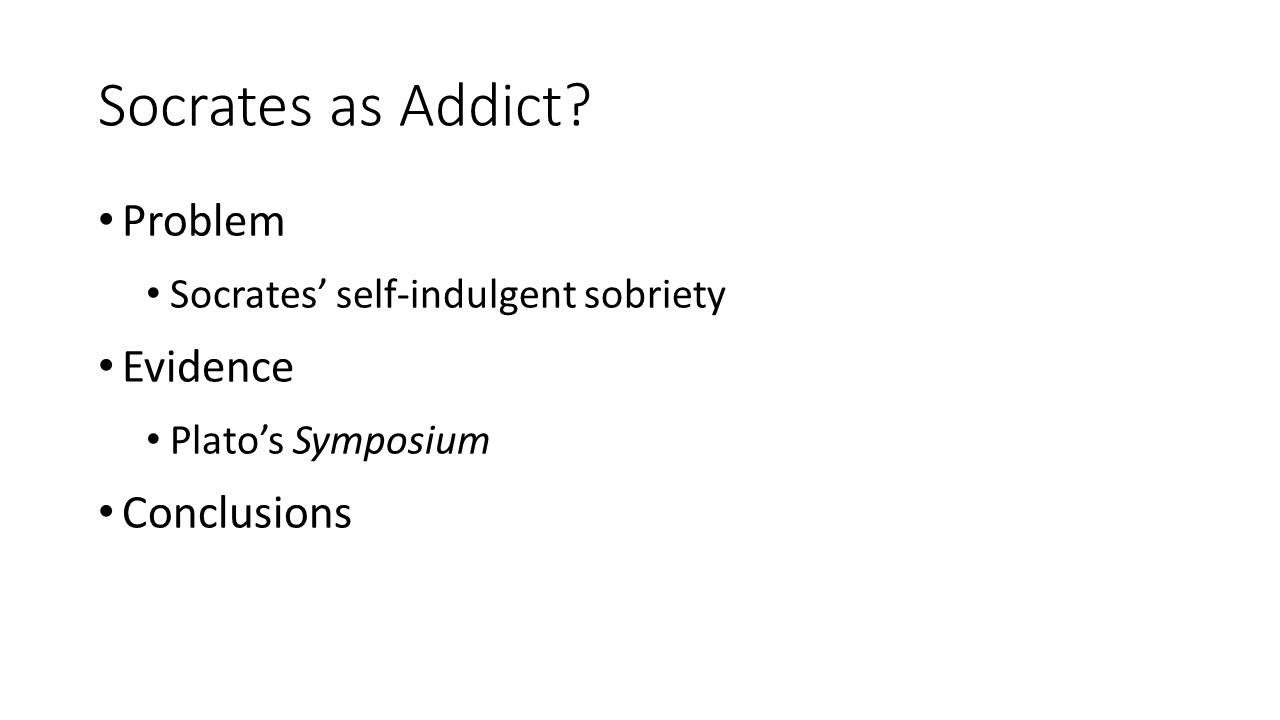
For the content segment of your presentation, use slides — not many, maybe only one! — where each is dedicated to, basically, a single idea. Use a main title followed by bulleted points, no periods. Bulleted points should employ, preferably, short noun phrases, definitely not sentences. As already mentioned, do not replicate spoken content on slides. (The "fade" animation for bulleted points isn't necessary but can be a nice touch.)
A slide (you'll likely need only one) listing your "Works Cited." The main title needs to say "Works Cited." Entries formatted as for MLA, for which see the Papers page. Note that the example which follows includes correct biblio citing of the Gorgias reading.
Encomium (praise) Speech with Figured Rhetoric
Essentials
- Encomium = praise speech. (Praise of fictitious character or deceased person)
- With figured rhetoric as per Encomium and figured rhetoric class meeting plus SWA
- 10-minute length
- Research (see below, "Details") cited on uploaded script; do not have to be stated explicitly in speech. (Does it help the rhetoric? your call!)
- No PowerPoint!
- Uploaded script must include reflections on your speech: its aim, its rhetoric, its (semi-?) hidden agenda
Details
The second oral presentation will be a ten-minute-long encomium without PowerPoint. What is an encomium? It is a speech praising someone or something. The ancients were very fond of these: praise of people, praise of cities, and so on — except that you'll be praising a person.
I am, though, asking that this be as well an exercise in eskhēmatismenos logos, "figured rhetoric," about which more on the "Encomium/figured rhetoric" Study Guide. Using figured rhetoric, you'll be conveying a message that your subject wouldn't want to hear if delivered in plain terms. Praise conceals and/or sugar-coats the otherwise unwelcome advice that you'll be offering; the advice is the (semi-)hidden agenda of your praise. (This is a very Imperial-Greek way to speak truth to power.)
Length. Ten minutes. In terms of word count, that's about 1,300 words if presenting orally at an average pace, or the equivalent of four pages, double-spaced, 12-point Times New Roman font for the text that you'll be delivering. (When I talk about page numbers or word count, that doesn't include anything but the words that you'll be speaking live and in class, not any additional element required for the uploaded word document.)
What to upload. By the date and time given on the assignments schedule, upload to the appropriate link on Brightspace > Assignments a word document with these elements:
- Your name and the title of your speech.
- The text of the speech you'll be delivering.
- Do not simply invent someone to address, nor should you make things up about anyone. Rather, be informed; that will require some research.
- Do not, however, make a big deal about your research during the presentation. If you're quoting or paraphrasing, let us know. During the presentation, cite sources of information only if you're sure it will lend rhetorical force to your speech. Otherwise, it kills the vibe. I do, however, require that uploaded text document all research using. . .
- MLA-style in-text citation (not footnotes) plus "Works Cited."
- Reflections on the speech you're delivering and on its rhetoric. What (within the rhetorical fiction) are you hoping to achieve? What is your (semi-)hidden agenda? What are some other rhetorical features of your speech?
Preparation Steps
- Read the "Encomium/figured rhetoric" Study Guide, plus texts linked to from there, for a better idea of what this speech assignment is all about.
- Choose a person, factual or fictitious, to praise, but also to advise using figured rhetoric. We'll be your live audience, but your chief (imaginary) addressee will be the person you're praising. (You can praise that person in the second or third person, but you need to imagine they're there, listening.)
- The person must be dead or fictitious, though you should treat them as if alive and present. Speak to them. In choosing, keep in mind that you can't be a fan about everything having to do with this person. In fact, it may be better to choose someone you're not a fan of.
- Keep in mind, too, that you want your speech to send a message to that person, one they'd ordinarily not want to hear from you. That is your (semi-)hidden agenda. That message likely will constrain your choice of person to praise
- Controversy and political themes are OK, but as per Syllabus, offensive, intentionally provocative, or otherwise abusive content or language will not be tolerated. Your audience is open-minded, but don't take advantage of that fact
- If you have any questions about person or theme, please, contact me.
- Do enough research on your honoree so as not to be simply making things up. Though you may not make up facts, you are free to spin them, that is, to color them so as to place them in a positive or negative light, depending on rhetorical need. For the written script, cite your sources as per MLA, both in your text and in a "Works Cited" section. (No specified minimum or maximum; use your judgment.) Do not plagiarize (simply copy or paraphrase without citing), do not use AI (that's plagiarism in this class).
- Construct your encomium.
- Do so more or less along the lines suggested on the Encomium [etc.] Study Guide and in readings accessed via that study guide
- You don't have to do each and every thing they talk about. You will, though, need an introduction, as per the Burton Exordium (= "introduction") page.
- Use praise as a cover for criticism. Can you flatter your subject into changing their ways? Can you praise others as a way to make your honoree jealous enough to change their ways? That's basically what this is about. . .
- Upload the document to the dedicated Brightspace link as per above.
Presenting: Practical Pointers
- PRESENT FROM A PRE-WRITTEN TEXT. Unless you can memorize your text, you will need to read off the page (your script) when presenting. Present from a printout or from your phone or tablet. Do not improvise, whether from notes or off the cuff. Do not use index cards for notes or text.
- REHEARSE AND TIME the presentation multiple times.
- USER-FRIENDLY EXECUTION. Oral presentation differs from written in a lot of ways. To present orally, don't just read a paper. Rather,
- Try as best as possible to spare us the details. I.e., cut to the chase, limit your quotations in number and length. One good example concisely presented can speak for a hundred.
- Signpost so that your audience doesn't get lost. ("Now we're going to take up the subject of. . . .")
- Look at, and make eye contact with, students, not me.
- Use voice level and inflection, physical gesture, overall pacing to assist your listeners in absorbing the structure of it all.
- Highlight what needs it
- Flat presentation can confuse
- Avoid!!. . .
- "Like" as filler/narrative marker ("Like he was like, OMG! And she was like LOL!")
- Dead-air fillers or similar:
- "Um"
- "Uhh"
- "OK?"
- "Right?"
- PROJECT A "PRESENTORIAL" PERSONA, or ethos, key to all persuasive speaking and teaching, as Aristotle correctly surmised. Project that more engaging, clear-voiced, "public" version of yourself, not the mumbling private one. FACE THE AUDIENCE, ENGAGE THEIR ATTENTION. DON'T BURY YOUR FACE BEHIND YOUR SCRIPT.
Audience Responsibilities
General
Your receptivity as audience to these presentations counts toward your overall class participation grade.
During presentations, please do not interrupt presenters. Jot down thoughts en route; after the presenter finishes, offer comments or questions.
As these presentations will in most cases represent first encounters with novel material, we should be reasonably tolerant on the accuracy front and similar. You are indeed encouraged to offer corrections and / or differing views during post-presentation discussion, but wait and be courteous.
(I may myself chime in, but will try to wait until everyone's had a say.)
Related to that: Please be courteous and kind, but frank. There can sometimes develop a dynamic where it all turns into a mutual admiration society. That helps nobody!
Audience Response Surveys (= oral presentation grading criteria)
Immediately after each oral presentation, you will fill out a paper survey. This is to heighten your awareness of challenges associated with oral presentation: what seems to work and what doesn't. Each survey takes the form of a questionnaire mapping precisely to grading criteria used by me for each of the two presentations. The filling out of these surveys forms part of your presentation grade.
When filling out surveys, remember:
- You're not grading presenters, you're educating yourself
- My grading is independent of your comments
Here follow links to those surveys/assessment rubrics:
For a better grasp of expectations and evaluative criteria, students should review those questionnaires as part of the process of preparing their presentations.