Text Access
Mesomedes
You'll be reading, and listening to, poems by Mesomedes, with text and translation drawn from the following online book chapter:
Whitmarsh, Tim. "The Cretan Lyre Paradox: Mesomedes, Hadrian and the Poetics of Patronage." Paideia: The World of the Second Sophistic. Ed. Barbara Borg. Berlin and New York: Walter de Gruyter, 2004. 377-402.
From that Online chapter:
- 377-378 (section 1.1, introductory material)
- 392 (section 3.3, just the translation of Poem 1, the Hymn to the Muse)
- Read Poem 1.
- Then listen to it sung in ancient Greek via YouTube, Atrium Musicae de Madrid, performers.
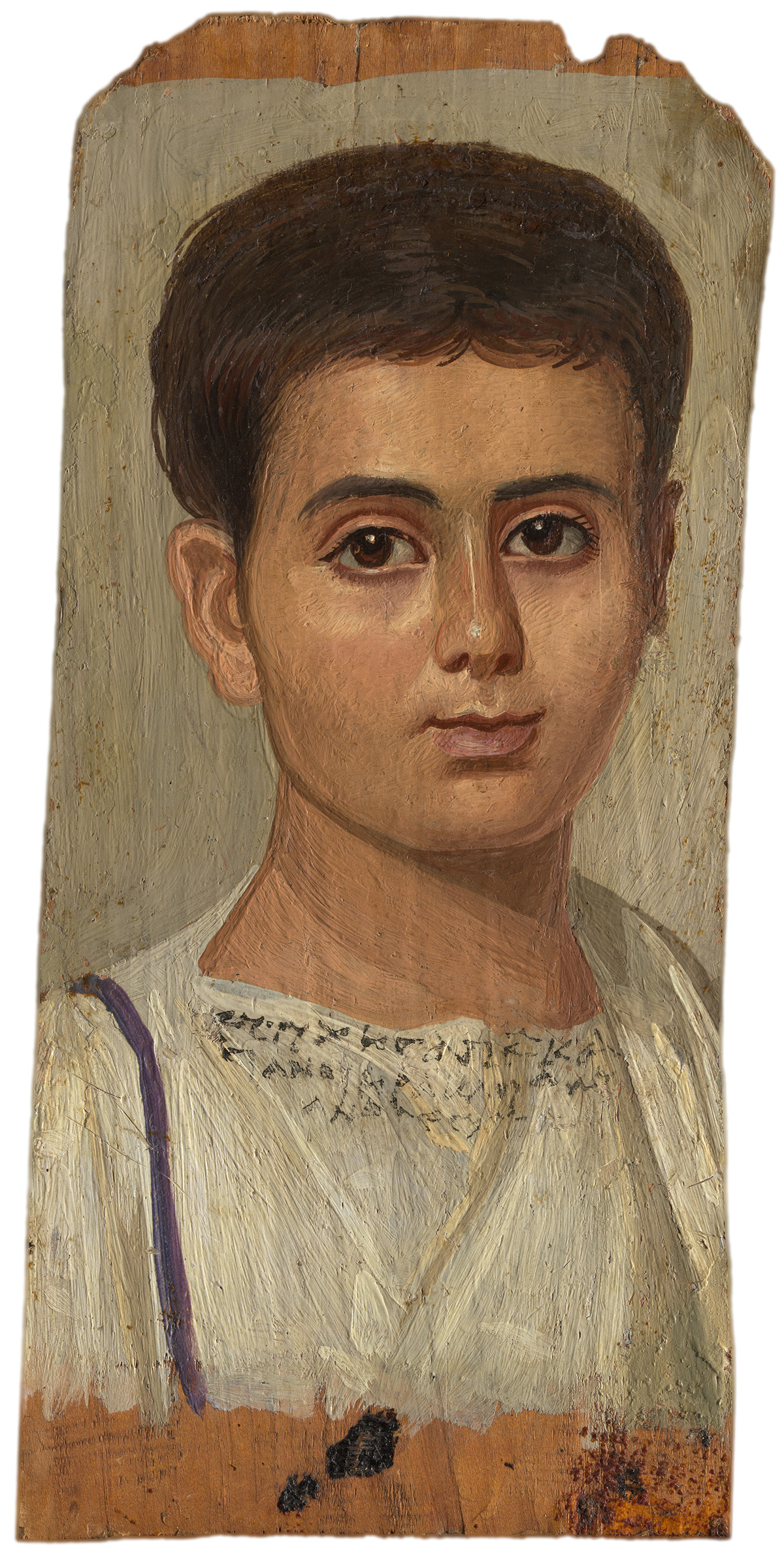
- It is extremely rare to have any annotated music at all from ancient Greece or Rome. The visuals for the video are Egyptian mummy portraits from the Roman period — very evocative, see also the example below. Poem 1 with music is repeated several times; one listen is enough. But you may want to watch the whole thing for the images.
- 398 (Mesomedes' gnat poem, no music preserved)
Alciphron
Benner, Allen Rogers, and Francis H. Fobes. The letters of Alciphron, Aelian, and Philostratus. Cambridge, MA: Harvard University Press, 1949.
Read the following letters (they're all very short!), with links:
Letters of Fishermen (book 1)
Letters of Farmers (book 2)
- 2.27, p. 127-129
- 2.35, p. 139 (letter writer and addressee are women — what's the situation?)
Letters of Parasites (book 3)
- 3.5, pp. 159-161
- 3.8, p. 169 (from a parasite, to a parasite, about a parasite)
- 3.26, pp. 213-217 (what's the situation?)
- 3.27, p. 216 (what's the situation?)
Letters of Courtesans (book 4)
SWA Prompt
Mesomedes was a real poet, one clearly in possession of paideia. But, as a freed slave, he was also a member of the sub-elite. Alciphron's letter writers are fictitious characters, practitioners of déclassé occupations — fishing, farming, mooching (the parasites), sex work —, though as writers, they seem to evince skill that speaks to paideia. So,
How might these readings change/modify your view of the second sophistic? How is dramatizing members of the sub-elite (Alciphron's letter writers) as in possession of paideia absurd — or is it absurd? And what does it mean that a real-life member of the sub-elite (Mesomedes) plays much the same paideia game as a Polemon or Herodes Atticus?
Introduction to Mesomedes
For a proper introduction to Mesomedes, see Whitmarsh's chapter. Here, I'll confine myself to a few observations.
We're told that Mesomedes was a cithara player and poet from the Greek island of Crete, and active in and around the year 144 CE. He was also a freedman of the Emperor Hadrian. That is, he started out as Hadrian's slave, then was freed by the emperor. As a freedman, he will have possessed only limited citizen rights and will have remained in service to his former owner, now his patron (Latin patronus, Greek prostatēs).
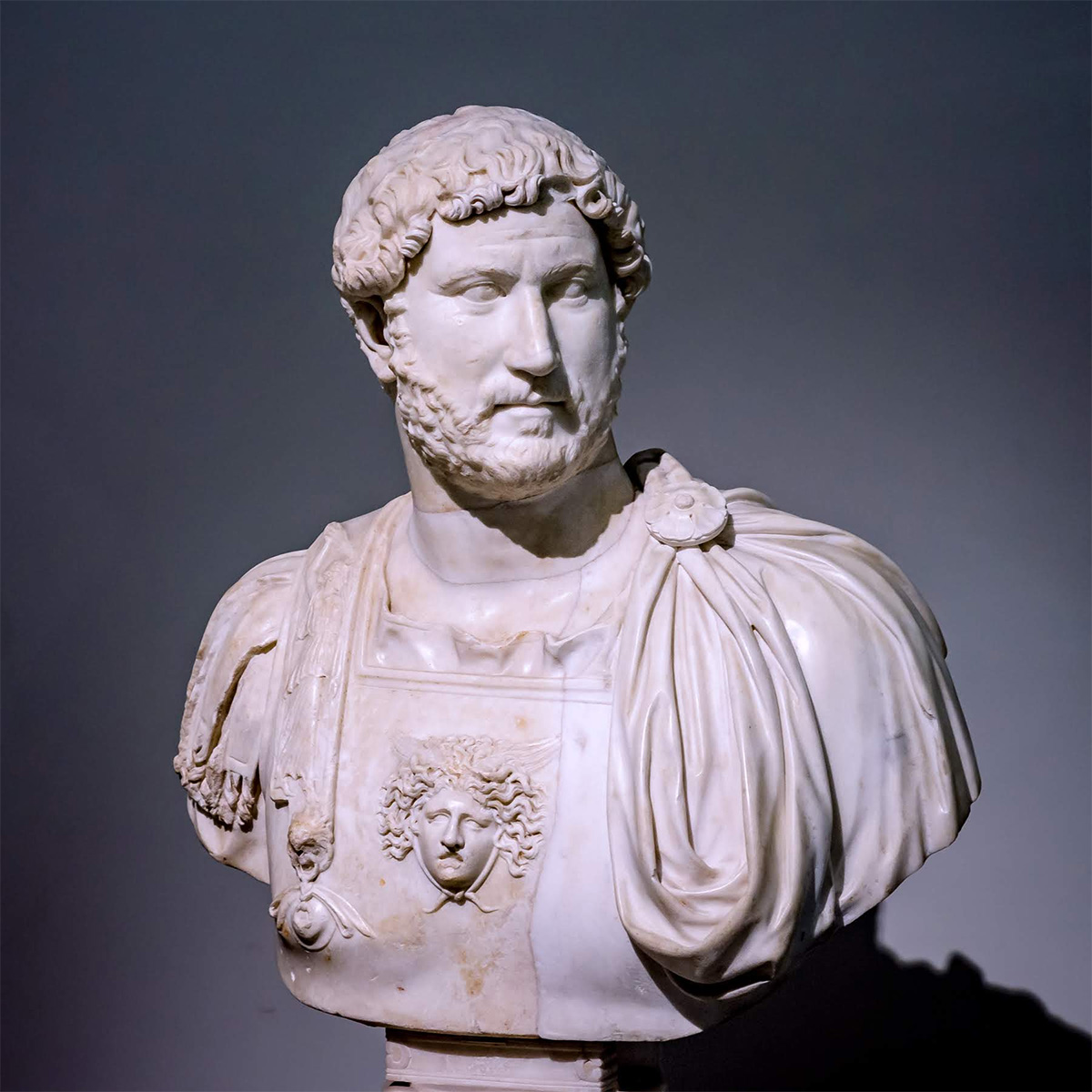
We have thirteen poems from Mesomedes; several, like Poem 1 (which Whitmarsh thinks is two poems), are hymns, that is, songs that invoke a god or gods, or that address abstract entities treated as divine/semi-divine persons (i.e., as personifications). We need, however, to keep in mind that Mesomedes was writing for a patron — the emperor Hadrian, no less — who, it seems, authorized that the poet be paid an annual salary. Mesomedes poetry arguably reflects this fact of patronage, as in the case of a now lost praise poem for Antinous, the emperor's young boyfriend.
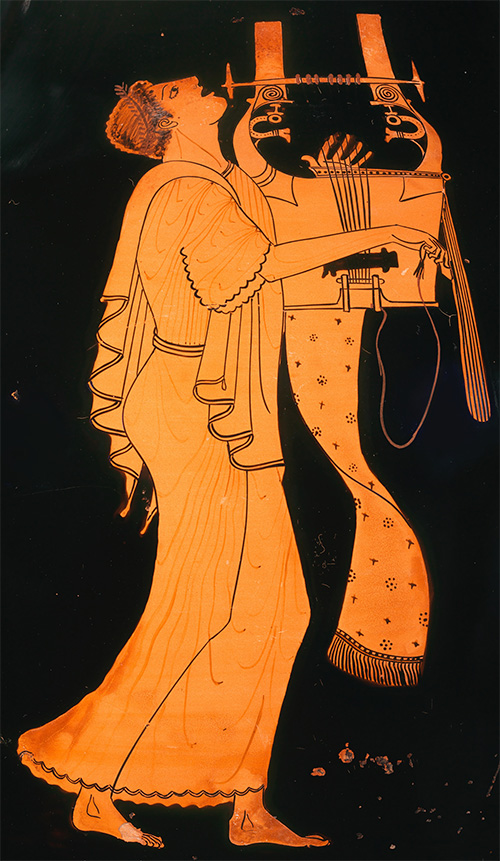
Mesomedes handling of his themes can only be described as "sophisticated." So, for instance, the very short Poem(s) 1 that I'm having you read feature learned allusion. Thus the poet, after invoking "Wise Calliope" (muse of song), addresses the "wise mystery-giver, / offspring of Leto, Delian Paean." Delian Paean, son of Leto, is Apollo, who is here a "wise mystery-giver," which seems to imply that poetry itself (Apollo's domain), perhaps even paideia more generally, is a recondite matter, open only to persons who have been properly initiated into its secrets. (For those who are interested, compare the opening of Horace Odes 3.1.) And we should not fail to miss the use of "wise" (sopha, sophe), root of the word "sophist" (sophistēs). Is there a connection with (second) sophistic?
Whitmarsh suggests that we try not to assign a single meaning to any work of literature produced, like Mesomedes' poems, under a patron. Or to quote Whitmarsh, "To understand such poems, it is fully necessary to seek out multiple meanings. The reason for this is to be sought in the complexity of the communicative process" (p. 379). Mesomedes does not, then, directly address a unitary audience; rather, his poems "triangulate" poet, patron, and the broader public in such a way that they are "heard" differently depending on who is listening/reading and under what circumstances. So, that gnat poem — is it just about gnats and elephants? Are there other ways to read it?
Finally, I won't hide from you that Whitmarsh — but this is clearly expressed in the opening to his chapter — thinks that scholars place far too much emphasis on Greek prose during this period, that of the second sophistic. It's true that rhetorical prose was the prestige medium for self-expression in Greek under the Empire, but there was lots of poetry being produced, too — cultural production that deserves to be viewed as an expression of paideia as much as any declamation by Herodes Atticus. The difference is that Herodes was a zillionaire with no one as patron, whereas a number of these poets apparently were clients (Latin cliens, Greek pelatēs, a free but dependent person) of powerful Romans. What, then, happens to our understanding of the period when we factor in cultural production like that of Mesomedes?
Introduction to Alciphron
General
For notes on particular points in Alciphron's text, click the footnotes in the online Loeb.
Not much is known about Alciphron. We are told that he was a rhētōr, a teacher-practitioner of rhetoric (the word is closely related to "sophist" in meaning), and one who cultivated the use of Attic Greek dialect. That, along with the fact that our author was given to nostalgic evocation of the Greece That Was, not to mention the additional fact that his writing features not just drama but one of the chief concerns of Imperial-era rhetoric, namely, ēthopoiia, "characterization," the art of bringing characters and their quirks alive through speech and action — all that tends to associate Alciphron with the practice of sophistic. Scholars tend to date his work to around 200 CE, making him a contemporary of Philostratus.
The dramatic setting is, ostensibly, fourth-century BCE Attica, give or take (Attica is the territory surrounding Athens). This is, however, an Attica of the imagination, a world pieced together from literary antecedents, with a heavy debt to comic drama; a world peopled by fishermen, farmers, parasites, and courtesans, whose erudition and verbal panache can, at times, seem out of step with their work lives, even to the point that they themselves resemble sophists.
Indeed, the author's fondness for learned allusion and citation matters in the letters. Yet it also matters that the collection, despite the literary games it plays, seems to show empathy for the trials and tribulations of its déclassé characters. So Alciphron's letter writers may not talk as you'd expect them to talk in real life, but that doesn't have to mean that their voices, even if passed through a sophistic filter, don't convey a sense of the precariousness of non-elite life in Alciphron's here and now.
Notes on Alciphron's Letter-Writers
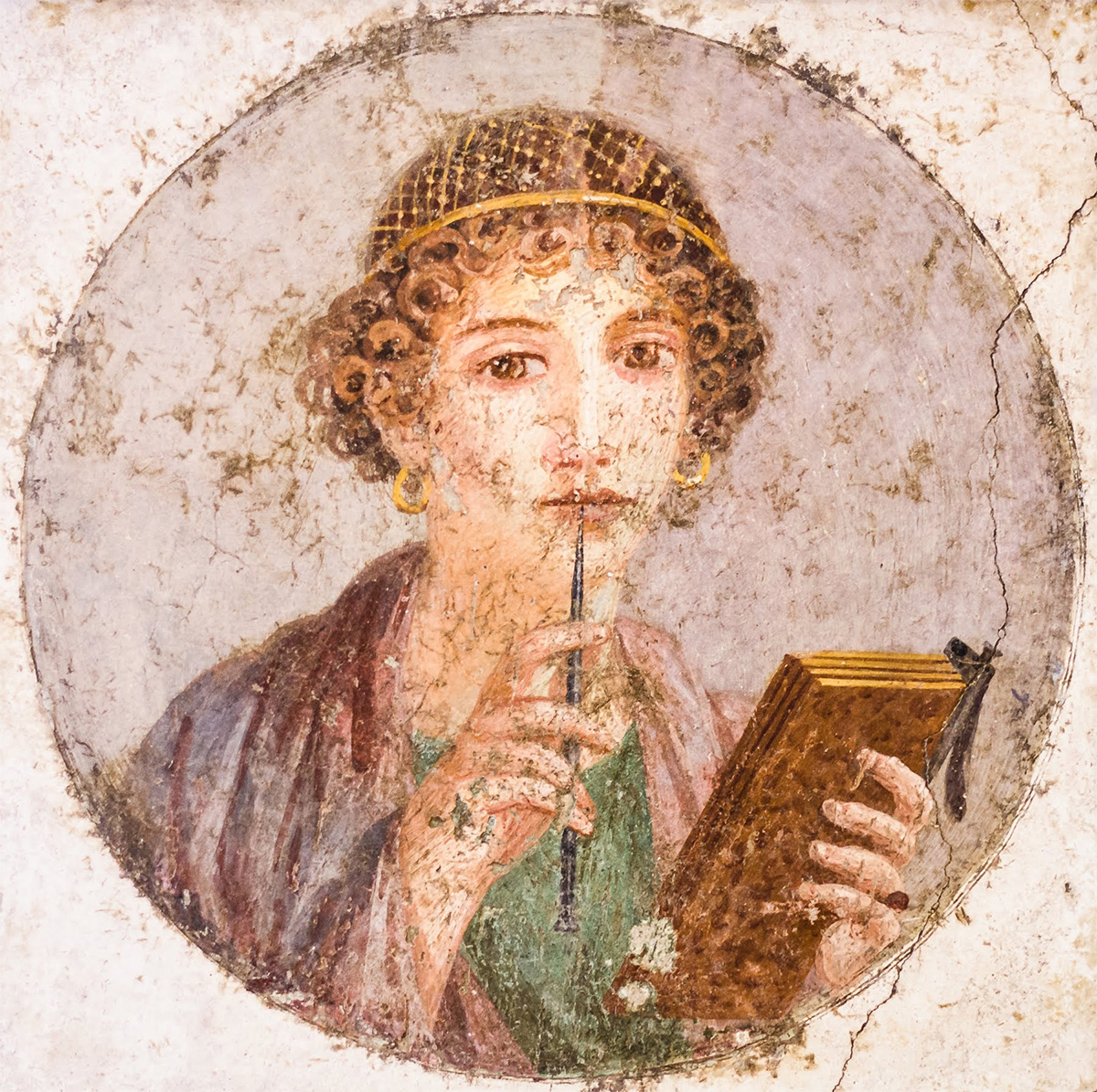
With few exceptions, Alciphron's letter writers and, for the most part, the recipients of the letters, are distinguished by their livelihoods: those of fisherman, farmer, parasite, and sex worker. Uniting them is the overall precariousness of those ways of making a living. Fishermen were and still are notoriously reliant on luck. For the fishermen in Alciphron, a spell of bad catches could mean starvation. Farmers may have been be able to rely on good planning and stored reserves as insurance against famine, but they, too, were at the mercy of factors like weather. Parasites, professional moochers who attached themselves to wealthy patrons who may or may not have felt inclined to share dinner scraps with these despised minions, often had to endure humiliation and physical abuse as the price of a handout. Within this group, parasites and fishermen dream more than the others of a life better than the one they have.
As for who has it best in Alciphron, in some ways, that will be his sex workers. Sex workers like these (that is, hetairai; see below) could be quite prosperous. Yet the work they did involved selling themselves to potential customers whose willingness to strike a deal, or even to pay up once a deal had been struck, could not always be depended on. An additional concern was violent abuse, a possibility that always lay around the corner. But the same will have been true for any woman lacking a guardian or protector, whether in classical Athens or in the Roman Imperial East (cf. Letter 2.35).
A few more words on parasites and sex workers. The word "parasite" (Greek parasitos) means, literally, "one who takes food alongside." Use of the word in the sense of "professional moocher" derives mostly from Greek comedy, where parasites use flattery to win a place at a rich man's table; you'll remember that Gnatho(n) in Daphnis and Chloe is a parasite. Athenaeus (ca. 200 CE) in book 6 of the Sophists at Dinner discusses, among other things, the case of real-life parasites; still, it's not clear to me the degree to which the comic stereotype had a true counterpart in real life.
In any case, flattery of the rich and powerful has always been common enough, and entertainers at dinner parties were certainly quite common. Some of them will have been quasi-guests whose role it was (a less than fully dignified role) to provide entertainment. Certainly, anyone down on their luck could find themselves reduced to straits like those of Alciphron's parasites, who are at times called upon to perform favors for their patrons. Or they may do so on their own initiative, and with a view to proving themselves worthy of friendship with their patrons — friendship, that is, on an equal and honorable footing. Perhaps unsurprisingly, it doesn't always end well.
If some dinner entertainers were folks like Alciphron's parasites, others will have been sex workers. In classical (i.e., ca. 500-ca. 300 BCE) Athenian society, sex workers typically were either slaves or free non-citizens. Under Rome, the same more or less obtained, though Roman sex workers could be citizens, albeit ones lacking most citizen rights.
Sex workers in the Greek sphere could be male (pornoi) serving mostly male clients, or female (pornai, hetairai) serving, again, mostly male clients ("clients" here in the non-technical sense of "customers"; contrast cliens, above). The sex workers in Alciphron are hetairai (singular, hetaira), often translated as "courtesans." Independent contractors, they might be hired to entertain at dinner parties, but they also sought to establish long-term relationships with their male clietele.
In the evidence from classical Athens, hetairai aren't simply sexual entertainers; they're expected to be able to hold their own at social gatherings when conversation turns to culture or literature. What is difficult to judge is the degree to which hetairai genuinely formed affective relationships with their lovers. It's certainly possible, perhaps likely that they did so at times. But the appearance of being attracted to potential clients was also a necessary part of the job.