Reading Access (BU Library login needed)
König, Jason, and Jeffrey S. Rusten. Philostratus. Heroicus. Cambridge, Mass.: Harvard University Press, 2014.
The page ranges that I'm asking you to read are as follows:
- pp. 103-117 (sects. 1.1-5.5)
- pp. 147-153 (sects. 14.4-15.10)
- p. 180 (sect. 23.26-29)
- pp. 201-207 (sect. 27)
- pp. 223-245 (sects. 33-34)
- pp. 267-269 (43.10-16)
- 307-319 (sects. 54-56)
For an outline of the work, see the Loeb edition, pp. 99-101. Note as well that the translation includes useful in-text notes. For that reason I haven't included notes here.
SWA Prompt
I don't believe that either of Philostratus' speakers ever defines what a hero is, but reading his Dialogue on Heroes, how do you think the dialogue would define heroism, that special something that makes heroes heroes? Is male gender a requirement? What are heroes good for in the here and now? And what do you think a hero is?
General Introduction
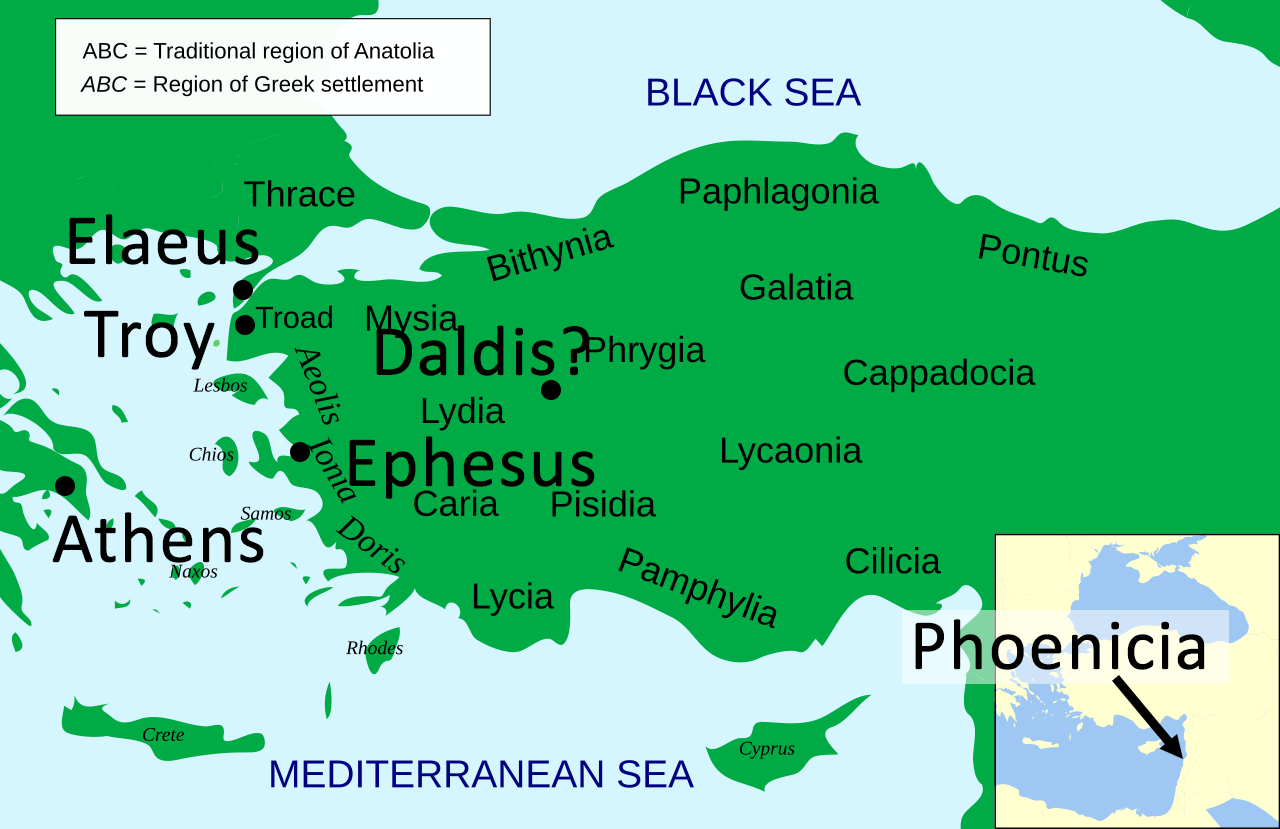
Philostratus' Dialogue on Heroes, most likely composed by the same Philostratus who wrote the Lives of the Sophists (there's little doubt that the same author wrote both, and we'll assume as much), plausibly dates to the years 222-225 CE and certainly consists of an exchange between two speakers: an unnamed Phoenician merchant sea-farer and an unnamed Greek vinedresser. (A vinedresser is a person who tends grape vines.) The time would seem to be the author's present. Though the dialogue lacks narrative framing (no "Once upon a time two speakers had a conversation about heroes, and here's what they said. . ."), we gather that the situation is as follows:
The Phoenician merchant, whose ship lies becalmed at Elaeus, on the European side of the Hellespont, has decided to disembark to pay a visit to a nearby grove and vineyard sacred to the hero Protesilaus, now a kind of god.
There, he meets the vinedresser, caretaker of the place and, it turns out, a man of deep learning. Realizing from a dream that destiny has led him to this spot, the Phoenician entreats the vinedresser to tell him about the heroes at Troy, a subject in which the vinedresser is well versed, thanks to regular encounters with the living presence of the long dead hero (1-7 — yes, this is a kind of ghost story).
Gladly complying with the request, the vinedresser teaches the Phoenician many things, among which is the fact that the heroes of myth were and continue to be real, and that their reality matters deeply in the here and now, where they reveal themselves to human beings from time to time.
The dialogue is important for a number of reasons. One is as evidence for hero cult. Hero cult seems to have begun when, starting in the 700s BCE, Greeks began venerating already ancient graves where, they believed, lay buried extraordinary beings eventually referred to as hērōes, "heroes" — beings who, even after death, protected and benefited the living, provided that the living paid them due reverence in the form of offerings.
So, for instance, their remains, if treated with reverence, were believed to have the power to protect the places where those remains lay buried; hence the fighting over which city, Athens or Thebes, would become the final resting place of Oedipus in Sophocles' Oedipus at Colonus.
At the same time, Homer in the Iliad, an epic tale of warlike deeds at Troy, likewise refers to the warriors who fought at Troy (or, at least, those of noble lineage) as "heroes." That first type of hero, as an object of veneration, rather resembles saints venerated within certain religious traditions. As for Homer's warrior heroes, they recall modern conceptions of the (super)hero. Marvel heroes have super powers. Homer's heroes, though always fully human, sometimes boast of a divine parent, but always possess prowess that can, at times, seem more than human, and indeed, often is.
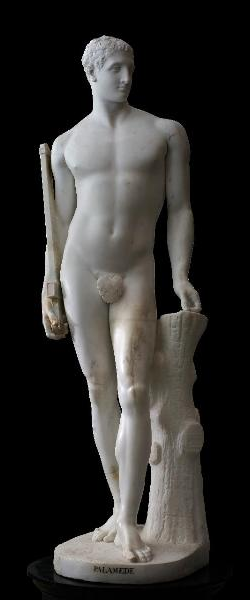
By the 500s BCE, Homer's heroes and others like them had joined the ranks of the recipients of hero cult, and heroes featured in this dialogue — Protesilaus, Achilles, the two Ajaxes, Odysseus, Palamedes, but we need as well to include women like Helen, plus figures like Heracles, not to mention the Trojan Hector — are, though long dead, living presences in the here and now.
As such, they and the role they play seem to have a lot to do with something we haven't yet talked about in this class: the revival of religious belief in the Imperial East during the period that we're studying.
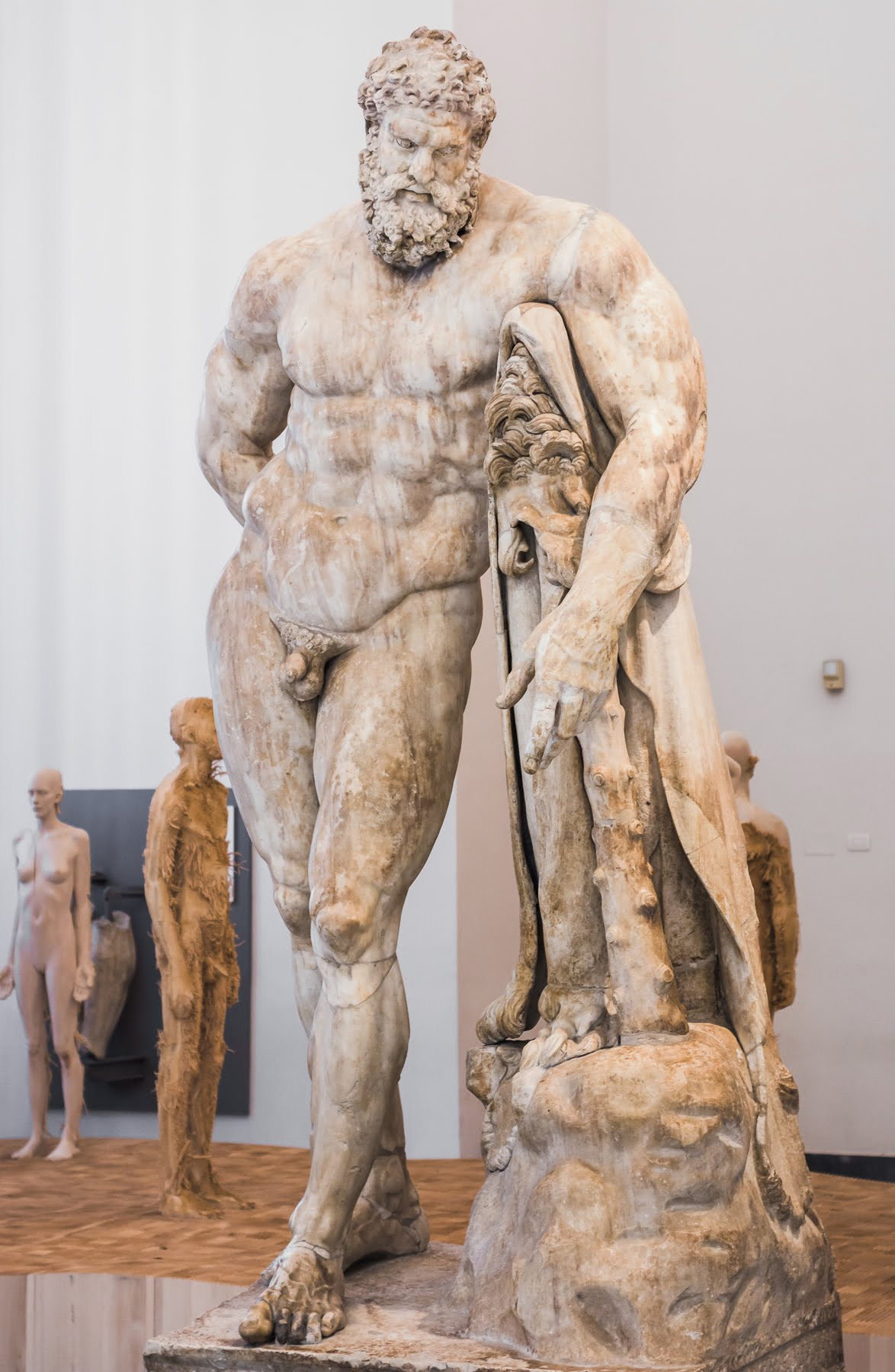
The introduction to the Loeb translation has, starting p. 11, a lengthy discussion of hero cult, if you're interested (optional reading). Here, I'll mention just a few additional details about the heroes featured in Philostratus' text. One is that they were, in general, far bigger and stronger than people "today" (pp. 125-135), a point echoed by "classic" authors like Homer and Herodotus. Another detail is that the presence of snakes near a burial is a sign that a hero lay buried there (Introduction, p. 21).
As for the other thing for which the dialogue is important, it's the project of correcting Homer. Correcting Homer? Who would dare correct the founding father of Greek literature? Well, the tradition of correcting Homer stretches at least as far back as Herodotus (mid-later 400s BCE). Homer's poems, because they weren't sacred texts, were fair game for those wanting to promote their antiquarian erudition, and Philostratus was no exception.
I'm not going list every one of the corrections found in the dialogue, but two bear mentioning: the campaign against Mysia, which, according to the dialogue, happened before the Greeks attacked Troy (evidently, not by mistake, as the Homeric Cyce would seem to have claimed); and (and this is probably the most important thing) Homer's failure to say anything at all about the peerless Palamedes, victim of a cabal orchestrated by an envious Odysseus. (Think Lucian's Slander.)
If at this point you're sensing something resembling a rivalry between Philostratus and Homer, you won't be wrong — a rivalry where the Dialogue on Heroes puts Homer's status as an authority on the Trojan War to the test. But agōn pervades the piece. Ellen Bradshaw Aitken argues that Philostratus' Dialogue on Heroes enacts a kind of contest between Greek and non-Greek culture at or near the geographical frontier of Greco-Roman influence. That's reflected in, among other things, the Greek vinedresser's effort to win a non-Greek, the Phoenician merchant (i.e., from ancient Lebanon), over to the vinedresser's Hellenocentric view of just about everything — an effort that Lawrence Kim terms a "contest."
In fact, agōn — “contest” — permeates the text, with, at a minimum, forty-nine instances of words evoking the idea of contest, conflict, or rivalry. In Philostratus' Dialogue, heroes obviously battle other heroes from the opposing army in a given conflict.
But Philostratus' speakers are clearly more interested in rivalries where heroes from the same side vie with each other in contests of excellence: Diomedes with Sthenelus, Palamedes with Odysseus, etc.
And there are prizes to be won, specifically, the aristeia or "meed of honor," a kind of most-valuable-player award. Every time a hero is honored by his comrades with the aristeia (the word is plural), we can understand that, in that moment, the honorand is being held up by his fellows as a kind of benchmark in a given area: Diomedes, for combat (23.23); Philoctetes, for archery (28.3); Palamedes, for combat (13.4) and for wisdom displayed in counseling and training the Greeks, and for ingenuity generally (33.1–19). Nor should we ignore the space that the dialogue assigns to discussion of athletes competing in the author's here and now (14.4-15.10).
Agōn, then, matters in the On Heroes, but so does the connection, one highlighted by the vinedresser, between warfare, athletics, training in both, overall excellence relative to one’s peers, and, not least, the emotions that agōn incites.