Sensitive Content
Students should know that some of the assigned reading will touch on issues of racial, gender-based, and other bias, and on apparent sexual violence. Those wishing to do so should share their feelings however they wish: via SWAs, class discussion, email/F2F conversation with the instructor, etc.
SWA Prompt
QUESTION: How does the assigned reading validate, how does it challenge ideas that you bring to the assignment?
Optional bonus/experimental question. Don't address if you don't feel like it, and if you don't, no worries. I do, though, intend to ask about this in class:
Does Polemon's Physiognomy tend to suggest that the writer regards all life as agōn? Does every encounter with one's Other (by Other I mean anyone other than oneself) threaten to "go south" unless one is armed with this kind of knowledge? Ok, not applicable — maybe! — to close family members and so on, but for Polemon, is the world so contentious that one needs early warning systems like physiognomy?Aim of Assignment
For this assignment you will be reading selections from Polemon's Physiognomy, a technical manual on how to read "character from people's physical appearance" (Swain in Boys-Stones 2007, p. 1). As for the specific aims of the assignment, they are:
- To get us thinking about how emotion mediated relationships, how it was a factor in creating connections and disconnects between people and things
- To explore attitudes to race, gender, sexuality, and class during the period of the second sophistic (1st through 3rd cent. CE)
- To continue to explore what it meant to be Greek under Rome
Readings
Text
Polemon's book, though originally written in Greek, survives only in Arabic translation and in a variety of abridgments, adaptations, and quotations in various languages. Most of what we'll be reading are selections from an English translation of an Arabic version that, scholars think, comes closer to Polemon's original than do other ancient witnesses to his text.
Here follows a full citation of the collection of chapters from which I've drawn the assigned readings:
Boys-Stones, G. R., and Simon Swain, eds. Seeing the Face, Seeing the Soul: Polemon’s Physiognomy From Classical Antiquity to Medieval Islam. Oxford: Oxford University Press, 2007. [online book]
For those wishing to write on Polemon's Physiognomy, the above-cited collection includes a number of useful studies of the work, including a chapter ("Polemon's Physiognomy," 125-201) that seeks to place it squarely in the context of second sophistic culture.
Assigned Page Ranges
We start with a brief quotation from Simon Swain's introduction to the "Leiden Polemon," the main source for the work we're reading.
Swain, Simon. "Polemon's Physiognomy." Seeing the Face, Seeing the Soul: Polemon’s Physiognomy from Classical Antiquity to Medieval Islam. Eds. Simon Swain and G. R. Boys-Stones. Oxford and New York: Oxford University Press, 2007. 125-201.
- Quotation from Bar Hebraeus Cream of Knowledge, on Polemon on physiognomy, Swain trans. (p. 178, top)
- Bar Hebraeus (13th cent.) writes in Syriac, a language related to Hebrew and Arabic, but Swain thinks he is quoting-translating more or less directly from Polemon's Physiognomy. Alexander-Paris is Paris, prince of Troy. According to myth, Paris abducted/seduced Helen away from her husband, Menelaus; that led to the Trojan War. Ilion is Troy. The seven guiding stars are a constellation, the Pleiades. According to myth, one of the stars became dimmer than the others as a result of grief over Troy's destruction. Agamemnon, brother of Menelaus, commanded the Greeks at Troy. His wife, Clytemnestra, sister of Helen, murdered him.
The next set of readings come from Hoylands' translation of the Leiden Polemon:
Hoyland, Robert. "A New Edition and Translation of the Leiden Polemon." Seeing the Face, Seeing the Soul: Polemon's Physiognomy from Classical Antiquity to Medieval Islam. Eds. Simon Swain and G. R. Boys-Stones. Oxford and New York: Oxford University Press, 2007. 329–463.
For the following selections, I'm asking that you read only the English translation of the Arabic text (the translation alternates Arabic with English), and only the following page ranges:
- Opening to the Leiden Polemon. (A5, pp. 341-343)
- Blue eyes, dots, etc. — the man from Cyrene. (A8, pp. 349-351)
- Black dots in the eyes, the man of Lydia. (A11, pp. 353-359 middle)
- Hollow eyes, the man from Corinth. (A12, pp. 361-365)
- The man with crab eyes. (A13, p. 365)
- Radiant eyes, the emperor Hadrian. The man from the island that is in Phoenicia (Hadrian of Tyre?). (A16, pp. 369-371)
- Natural eunuchs, Favorinus. (A20, pp. 377-379).
- ". . . except for one man." Polemon almost certainly has mind his arch-rival Favorinus, who came from the "land called Celtas," that is, Gaul (modern France), and as a sophist excelled in Greek oratory, though he seems not to have been Greek. For the bitter rivalry between Polemon and Favorinus, Philostratus Lives of the Sophists pp. 59-61.
- Physiognomy of limbs, confirmation of signs. (B1, pp. 381-383)
- Similarity of humans to animals. ("The Second Chapter," pp. 385-391 top)
- Masculinity, femininity. (pp. 393-395)
- On nationalities/races. (B31-33, pp. 423-429 top)
- On those whose appearances deceive. (B38, pp. 437-439)
- On the sign of the person soon to be afflicted by sudden misfortune. On detecting immanent wife abduction. On a man lying about a boat that sank. (pp. 457 top-461)
Polemon and Physiognomy
As you'll recall from your reading of Philostratus' Lives of the Sophists, Polemon of Laodicea (88-146 CE) was a distinguished orator, teacher of rhetoric, and all around bigwig from the age of the second sophistic. Among other things, he wrote what was a much admired and highly influential Physiognomy. Polemon's Greek does not survive, but translations, paraphrases and abridgments in Greek, Syriac, Arabic, and Latin do. What I've assigned is from a translation, dating perhaps to the 9th or 10th century CE, into Arabic; as mentioned, scholars believe it provides a rather good idea of Polemon's original text.
As for that original, it dates perhaps to around 130 CE (Elsner in Boys-Stones 2007, p. 208) and concerns how to read the body's external signs — eye color, facial features, etc. — as a way to know what otherwise would be invisible, or, at least, difficult to read without prolonged acquaintance and/or study, namely, someone's character: the emotions to which a given individual is prone, the behaviors that those emotions likely will prompt.
The word "physiognomy" derives from Greek phusiognōmonia, from phusis, "nature," "character," and gnōmōn, "one who knows, interprets." The Oxford English Dictionary defines physiognomy as "[t]he study of the features of the face, or of the form of the body generally, as being supposedly indicative of character; the art of judging character from such study." Polemon would likely tell us that it is the art and science of reading the soul through the body's signs.
Polemon himself emphasizes, without exclusively focusing on, the eyes as windows into the soul:
For the eyes are the gateway to the heart and the source of ambitions. Following on from the eyes are the eyebrows, then the forehead, the nose, the mouth, then the jaw, and the head, for there is nothing more truthful after the eye nor a more sure witness to what is in the heart than these. (Leiden Polemon, in Boy-Stones 2007, p. 381)
Polemon was not the first to write on physiognomy. The philosopher Aristotle (384-322 BCE) discussed it; certain treatises on the topic, not all of them preserved, predated Polemon's. The body and its signs figure prominently in the writings of sophists like Dio of Prusa and Philostratus. Polemon is, evidently, one sophist who deemed himself sufficiently well-versed in the art to be in a position to offer other aspiring practitioners a guide to the proper practice of it.
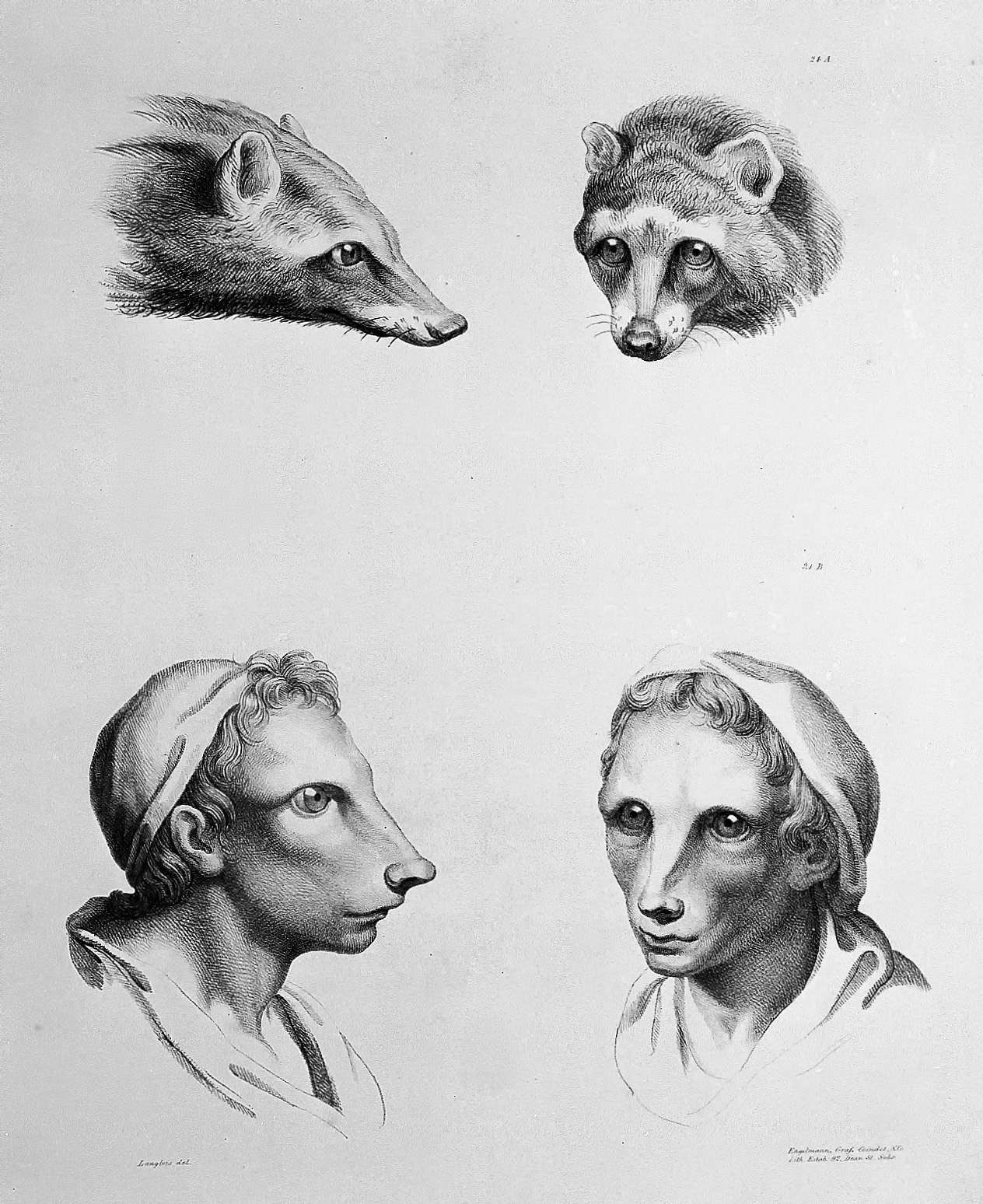
Polemon, like others writing on the topic, very much presents physiognomy as epistēmē, knowledge systematized according to rational principles — in a word, science. Yet it is no easy task to view ancient physiognomy as anything but pseudo-science, what with its reliance on gendered and ethnic — even racist — stereotypes. Still, a thoughtful approach to the topic does not have to be uncritically sympathetic. Nor can we achieve a rounded understanding of any discipline unless we try to view it from within its own intellectual horizons.
Viewing physiognomy from within those horizons, we see how it relies on rhetorical proof: enthymemes (complex, elliptical syllogisms), analogy, etc. It appeals, in Maria Sassi’s phrase, “[to] collective patterns of thought and personal intuitions” (The Science of Man in Ancient Greece, 81). At the same time, Polemon's repeated insistence that the physiognomist must never rely on only one sign but must seek confirmation in multiple signs — that seems intended to establish the scientific bona fides of the book, which, notes Swain, is intended as a practical manual.
Of interest to us is the very idea that such a science would be useful to know. Who, though, would have needed to know it? What will have been its "value added"? How did this knowledge equip one, and for what? One thing that we'll be exploring is physiognomy as technology with the potential to mediate inter-personal interactions, a kind of "app" to be deployed whenever you have to deal with someone you don't already know.
I would suggest that that has a lot to do with how Polemon's treatise treats emotion as a factor shaping relationships between self and other. Of course, what Polemon is chiefly interested in is reading character, ēthos, from bodily "tells." But an important component of character will have been those emotions to which a given individual is habitually inclined: fear, greed, lust, envy, and so on. Indeed, Polemon has strikingly little to say about "good" traits, and it may be worthwhile to ponder just why his treatise is so very focused on the negative.
How close is the Arabic to the lost Greek? Scholars believe that it is, on the whole, fairly close. Thus it holds value for us as a witness to Polemon's original text. Still, some place names are difficult to correlate with known places; there you'll see the translator simply transliterating the Arabic. Further, when reading the English translation of the Arabic, we notice at times religious sensibilities foreign to a Hellenic polytheist like Polemon. So, for instance, Polemon's Corinthian blames Satan as the source of his affliction (p. 365). Notes Swain in his chapter on the treatise, Polemon's Greek at that point likely will have referred to to a daimōn, a "spirit."
- It is important to note that the Arabic-speaking world played a key role in preserving ancient Greek knowledge. Greek philosophy, science (physiognomy included), and medicine were important to medieval Arab scholars, who translated many of those texts into Arabic. See more at the Stanford Encyclopedia of Philosophy.